

How each mention is classified
For every answer that names a brand, Echod looks at the wording surrounding that brand’s mention and classifies it as positive, neutral or negative. Praise (“reliable”, “easy to set up”, “best for”) pushes it positive; criticism (“expensive”, “limited”, “complaints”) pushes it negative; plain description stays neutral.How the score is calculated
Neutral mentions pull the score toward 50, so a brand described mostly in neutral terms will sit close to the middle even if it has a few strong positives.
Example
Your brand was named in 40 answers: 22 positive, 14 neutral and 4 negative.Where you see it
- Dashboard: the Sentiment row in the Score breakdown.
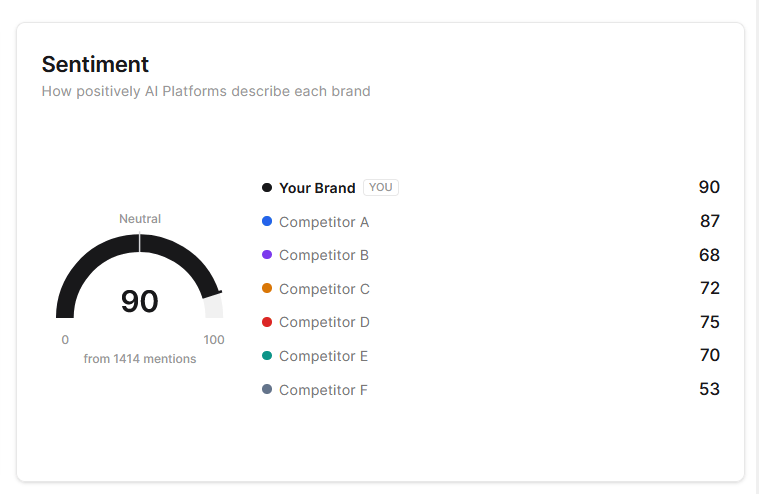
- Topic and prompt detail pages: a gauge per brand with 50 marked as neutral, plus the number of mentions behind it.
- Chat detail: the tone of your brand’s mention in that single answer, for example “Positive tone 81/100”.
Put it to work
- Sentiment is most useful in comparison. A score of 60 is good if competitors sit at 52, and weak if they sit at 75.
- When Sentiment drops, filter the chats on a topic or prompt and read the answers that name you. The wording usually points to a specific theme, such as pricing or support, and the cited sources show where that framing comes from.
- Low sample sizes swing easily. A score built on five mentions can move a lot from one week to the next; check the mention count on the gauge before reacting.