

How it is calculated
Example
Across the last 30 days, the answers to your prompts contain 400 brand mentions in total. 60 of them are your brand, 100 are your main competitor, and the remaining 240 are spread across other brands.Where you see it
- Dashboard: the SOV row in the Score breakdown, with its change against the previous period.
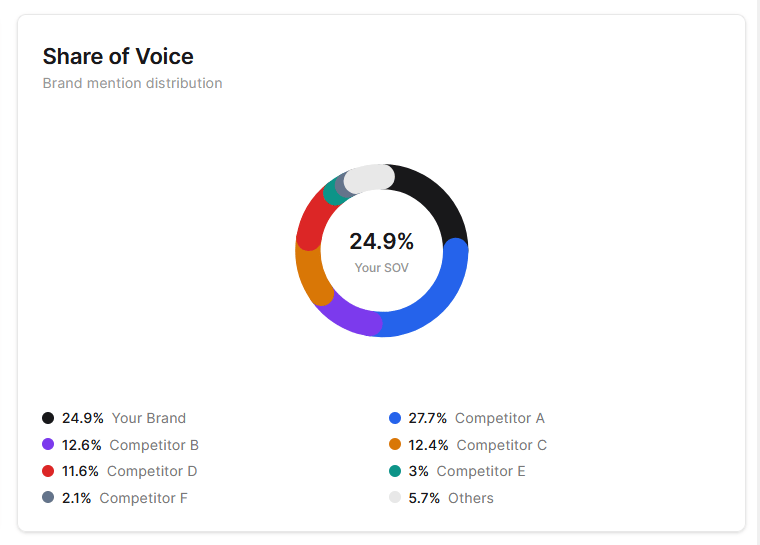
- Topic and prompt detail pages: a Share of Voice donut chart showing each tracked brand plus an Others slice for everything else.
- Top Brands tables: the SOV column on topic and prompt detail pages.
Visibility versus Share of Voice
The two often move together, but not always:- High Visibility, low SOV: you are named often, but answers list many brands. You are one option among many.
- Low Visibility, high SOV: you appear in few answers, but when you do, you dominate them. Typical for a strong niche brand.
- SOV falling while Visibility holds: new brands are entering the answers. Check Settings > Competitors > Discovered for newcomers.
Put it to work
- A large Others slice means the market in AI answers is fragmented. Look at which discovered brands make it up; some may deserve to be tracked as competitors.
- If one competitor’s share is growing, open the prompts where they gained and compare the sources those answers cite with the ones that cite you.